


BALLROOM DANCE
Waltz · Foxtrot · Onestep · Quickstep
ART, ELEGANCE AND TIMELESS VALUE
The history and evolution of Modern Ballroom dance (Waltz, Foxtrot, Onestep, and Quickstep) began after the First World War. Tango was introduced to England much earlier, in 1913.
Folk music, both during and after the First World War, changed and evolved dramatically from its previous style. Waltz composers wrote romantic ballads that were played at a much slower tempo than the earlier style. On the other hand, the lively and cheerful music of Carnival inspired dancers to develop energetic movements, some of which were not considered socially acceptable.
As a result of the chaotic situation, and in an effort to bring some standardization to the dances, Mr. Philip Richardson, the dance editor of *The Times*, convened the first Ballroom dancers’ conference in 1920. The conference resulted in the standardization of a minimum number of figures in the Onestep (which later became the Quickstep), Waltz, Tango, and Foxtrot. The evolution continued throughout the 1920s and 1930s.
As a result of the chaotic situation, and in an effort to bring some standardization to the dances, Mr. Philip Richardson, the dance editor of *The Times*, convened the first Ballroom dancers’ conference in 1920. The conference resulted in the standardization of a minimum number of figures in the Onestep (which later became the Quickstep), Waltz, Tango, and Foxtrot. The evolution continued throughout the 1920s and 1930s.
Waltz
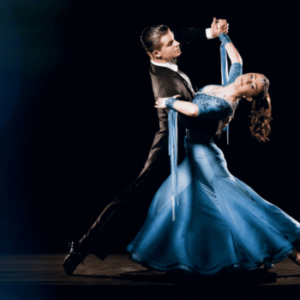 The Waltz first appeared in Europe in the 18th century. Its name comes from the German word “waltzen,” meaning “to turn” or “to rotate.” It was originally danced by farmers in Germany, particularly in Bavaria and Bohemia, but gradually spread to the aristocracy.
Before the emergence of the Waltz, the aristocracy danced the Minuet and Allemande, which were based on Baroque music. However, the farmers’ dances were more entertaining. At the time—although it may sound exaggerated today—the Waltz was considered scandalous, immoral, and improper. It was the first dance in which the gentleman and lady had close physical contact in a public setting, as well as direct eye contact.
In the 18th century, the Waltz made its way to Vienna, where it became particularly popular among the Austrians, and this is how the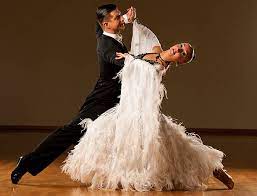 Viennese Waltz. If there is one person whose work became closely associated with the Waltz, it is undoubtedly Johann Strauss the Younger, with his most famous work being “The Blue Danube.” However, other composers such as Mozart, Schubert, Chopin, Brahms, and Liszt were also inspired by the Waltz and composed some of their most classical melodies, which are still performed today.
The Waltz is danced in 3/4 time, with turns around an imaginary axis at the center of the couple, with emphasis on the first step. Throughout the 19th century and into the early 20th century, the traditional 3/4 time signature also saw variations in 2/4, 6/8, or 5/4. In any case, the Waltz is here to stay. Today, it remains one of the most popular and beloved forms of dance around the world and perhaps the most popular choice for wedding receptions, from east to west and north to south.
Viennese Waltz
Τo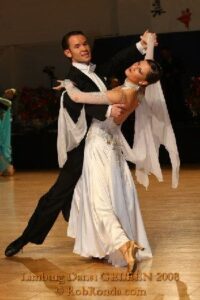 The Viennese Waltz is fast-paced and energetic (55–60 measures per minute), particularly…
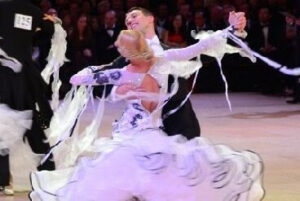
youthful for its time. As the years passed, scandalous or less scandalous, the Waltz became beloved by the public, spreading and traveling everywhere. France, England, and later the United States. This led to various variations of the dance.
Fox Trot
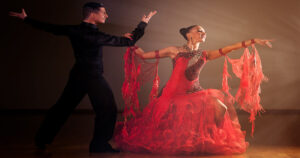 The Foxtrot first appeared in 1914, introduced by the dancing duo and teachers Irene Castle and Vernon Castle. They are credited with giving the dance its elegance and style. As for its name, there are several theories. The most popular suggests that it was named after the comedian and dancer Harry Fox (the “trot” of Fox – Foxtrot). Another theory attributes the name to the fox’s trotting gait (fox + trot), while another considers African-American dancers to be the source of the Foxtrot.
What is certain, however, is that during the first half of the 20th century, the Foxtrot was an especially popular and fast-paced dance. In fact, it is said that its popularity was never surpassed, not even by the Tango or the Waltz.
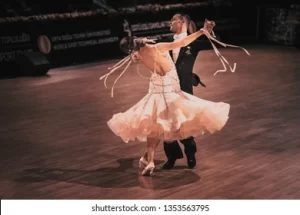
Over the years, the original fast form of the Foxtrot (Travelling Foxtrot) evolved into a more stationary style (on the spot), largely due to the large number of dancers performing it on the dance floors.
The main characteristic of this dance is the continuous flow and control of movement, while it has four basic figures: the “walk,” the “three-step,” the “natural turn,” and the “reverse turn.” Foxtrot served as the foundation for many other dances, such as the Quickstep.
Tango
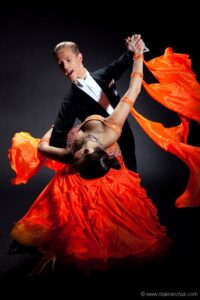 Tango, from the Spanish, is a form of music (in 2/4 or 4/4 time) and its corresponding dance. Tango was born, flourished, and continues to thrive in the Río de la Plata region, namely Argentina and Uruguay, and has since spread to almost every part of the world. The Spanish word *tango* is believed to have its etymological roots in the Niger-Congo language family of West Africa and is related to the word *tamgu* (dance/to dance) in the Ibibio language of this language family.
The roots of Tango are diverse and varied: the music and songs of the gauchos, influenced by Andalusia in Spain and accompanied by handclaps and heel taps; the African-derived candombe, performed with percussion instruments, along with the corresponding dances of the Black population; the bel canto and canzonetta of Italian immigrants, together with their more refined dancing style; the Spanish-Cuban habanera; and the Waltz. Related genres include Milonga and Argentine Waltz.
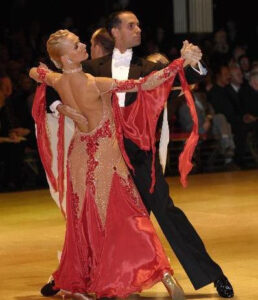
The decade from 1910 to 1920 was the period of the international “Tango craze.” Around 1910, Tango began to be danced outside Argentina as a new fashionable dance among the urban classes and even the aristocracy, first in Paris and then throughout the rest of Europe and North America. This is reflected in numerous newspaper articles and social dance manuals of the time, which included Tango among their dances.
Tango, which was introduced much earlier in the century, has a character and atmosphere that were closer to the lively Latin style of music and dance. Although it was initially introduced with a feline-like style of movement, it retained its dramatic elements and also evolved into a sharp, staccato style of dance.
Quickstep
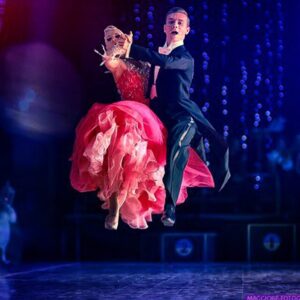 The Quickstep emerged in the early 20th century, more specifically in the late 1920s. It is considered a combination of Foxtrot and Charleston. It is a fast and highly dynamic dance that got its name (Quickstep = “quick steps”) from its rapid movement across the dance floor, speed, and momentum.
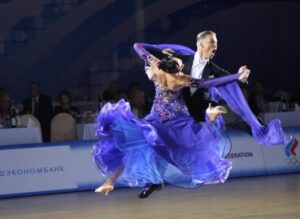
Its figures are based on both the closed turns of the Waltz and the open turns of the Foxtrot. Its rhythm is lively, and it is danced at approximately 50 measures per minute.